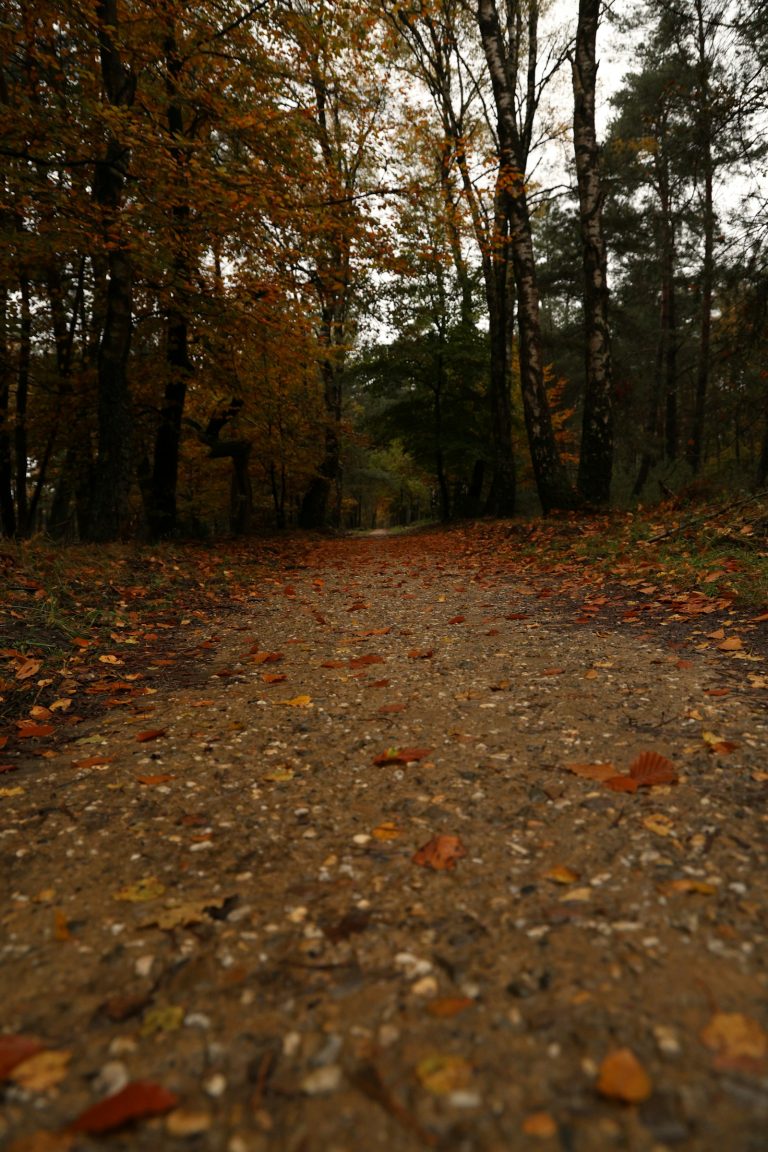
I used to bemoan people who would wax lyrical about the colours of autumn. I missed the sunny summers and the warmth. Walk-and-talk sessions in autumn are for the dedicated walk-and-talker: some days it’s four seasons in one day, as the Crowded House song has it. Rain, sunshine, wind and cloud, all on one walk.
Having said that, the beauty of our environment, and the way everything spreads out around you, provides a passive and yet ever-present context to what’s being discussed. That turns out to be really grounding.
Grounding that’s always there
Sometimes, in therapy and in life, we become dysregulated and need to ground ourselves again. Most of us know the grounding exercises: breathing, closing your eyes and listening for a sound, noticing what you can feel with your hands.
When you’re doing walk and talk, all of that grounding is present all the time. We are, at our very core, people of this planet, and being out in nature can stimulate us, ground us and help us to feel safe. It certainly helps some people to feel safe, which is why I offer walk and talk sessions. That safety means we can go to deeper places in our conversations and press things a bit more. Even if it’s absolutely chucking it down, there’s still something in it.
Forward motion
The other constant in a walk-and-talk session, as well as nature, is forward motion. If you have a sense of stuckness, then if nothing else, you will have moved forward physically. For many people, that physical action is massively significant and helpful. Even when the conversation isn’t moving forward, our bodies are, and that gives a very positive context for wrestling with difficult things.
If you can do nothing else, you can walk forwards.
Silence feels different
Therapists are trained to be comfortable with silence, but clients often aren’t. In a sit-down session, face to face or online, that discomfort can sometimes help to move things along. On a walk, silence is experienced differently, because you’re still moving forward.
Sit-down therapy is geared up to talking – it’s called talking therapy, after all. Outdoors, we’re doing something we’ve done for most of our lives, and it isn’t talking. It’s walking. Something happens in that space that goes beyond what can be put into words, and everybody experiences it differently.
Where it started for me
I’m hugely reluctant to define a type of person who suits walk and talk. All sorts of people engage with it, for all sorts of reasons. But I can say why I started.
When I was a lot younger, I needed someone to talk to and didn’t have anyone. Therapy wasn’t as common in the cultural vernacular then. But I did have a dog, Benji, and we’d go for long walks in the fields. I’d talk to him, and people must have thought I was crazy. He was an amazing therapist: his listening skills were profound. And there was something about the motion of walking that helped me release the things that were bothering me.
As someone who’s neurodivergent and sometimes gets stuck with my thoughts, I still find that. Walk and talk can suit verbal processors who need space and time to order their thoughts, people who love nature, and anyone who finds the pressure and expectation of sitting opposite someone, or in front of a screen, a lot. If you recognise a Try Hard or Be Perfect driver in yourself, there’s comfort in it too: if you’re moving forward, you’re doing something “right”.
Next time you’re stuck on something, take it for a walk. Notice what changes when your body is moving forward, even if your thoughts aren’t.
If you’re thinking about walk and talk therapy, dress for the weather, be prepared for something different, and try to leave your preconceptions at home.
A question to sit with
What helps you think more clearly: sitting still, or moving?