When I read that the largest British study yet will look at how the planned social media ban for under-16s affects young people’s mental health, my gut reaction was: here we go again.
To me it’s a sign that our technology is moving faster than our social and cultural understanding. Rather than looking at the issues new technology brings up, we try to stall how we engage with it. Unless something fits neatly into the status quo, we worry.
We’ve been here before
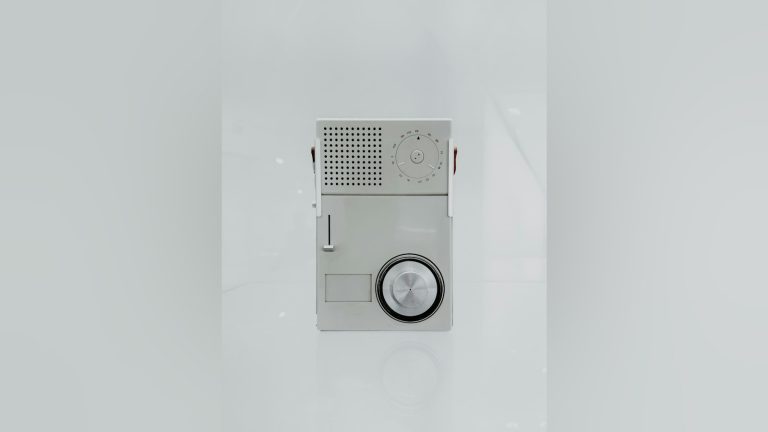
In 1964, Radio Caroline started broadcasting pop music from a ship in international waters off the English coast. Young people suddenly had unmoderated, unfiltered radio, and it caused a tremendous amount of upset. It couldn’t be allowed. And there was no way of controlling a young person who went to sleep with a transistor radio under the pillow.
Does that sound familiar?
Parliament outlawed the offshore stations in 1967, and the BBC launched Radio 1 the same year. Nobody complains about Radio 1 now. Not on a regular basis, anyway.
I don’t want to brush aside the real dangers. Online bullying can be horrendous and, in extreme cases, a threat to life, so this conversation needs a great deal of sensitivity. But a blanket ban on something that has become so much a part of our lives seems to me a bit of a Procrustean solution, to say the least.
Square eyes
When I was growing up, I was told that if I sat in front of the TV for too long I’d get square eyes. I genuinely used to worry that my eyes would go square.
Watching TV, though, there was no social engagement going on. I was simply consuming whatever was on the screen. What young people do on their phones is different. Much of it is broad-ranging, engaging, fun and educational, and it often involves being part of a community, even if that community is online rather than face to face.
The idea that this is social isolation is what people most often get wrong. It could well be the opposite.
The cultural Parent
In transactional analysis, the ego state diagram is three circles stacked on top of one another: Parent, Adult and Child. Eric Berne chose those words to make the ideas accessible.
The trouble is, people hear “Parent” and think, “Here we go, the therapist is blaming the parents again.” That isn’t what it means. Parent stands for the authority figures we took information from. That information was introjected, swallowed whole without being weighed up.
The cultural Parent is the part that comes from the culture around us, and it has a strong influence on how we parent. One message that hung around far longer than it was helpful, if it was ever helpful, is “children should be seen and not heard”. Thankfully, I hope, we’ve moved a long way past that. But another message lingers: adults are there to teach, and children are there to learn.
Digital natives and digital immigrants
Many parents are what the writer Marc Prensky called digital immigrants. The digital world arrived and we had to learn to understand it. Our children are digital natives: for them it has always been there. In some ways they understand the online world better than we do.
Perhaps that’s what scares us most. It feels the wrong way round. As adults we’re supposed to know more, and here we don’t. It’s a field leveller, and it challenges us to learn from the younger generation.
Those conversations often show up something else that has nothing to do with social media: our capacity to talk to a younger generation that lives in a different world, speaks a different language and has different worries from the ones we had at their age.
Do some research. Facebook isn’t where most young people are these days. Platforms like Snapchat, Instagram and TikTok are free to sign up to, so have a look at what people are talking about. Like any real-world space, they have dark corners. They also have a great deal of positivity and value.
Then ask the young person in your life: “Can you explain this to me? Can you help me understand what’s happening here?” And listen.
A question to sit with
My fear is that a blanket ban says more about our unwillingness, or inability, to change and learn than it does about a nuanced and difficult problem. If we keep making knee-jerk decisions, as we did with Radio Caroline, we risk alienating a generation we could learn a lot from.
What might the young people in your life teach you about the present world, and about yourself?