Who hasn’t engaged in a bit of hero worship from time to time? From the ancient Greeks right up to the modern era, the aspiration to become something more, something greater, through our connection with others is a strong thread running through the complex tapestry of our cultures.
Hero worship can take place on many levels, from the personal to the professional. Watching the latest contestant on Bake Off create something amazing, or seeing an untrained celebrity perform an exemplary dance on Strictly, can bring a vicarious sense of success and joy to our hearts and minds.
Similarly, in our professional worlds, reading an article or book by a much-respected author in our field can be inspirational, shining a light that helps us keep our focus and direction. Even from an early age, I remember looking up to many of my teachers at school – especially the ones who could combine their own character and humour with a passion for the subject they were teaching. Their capacity to make the subject sparkle and glow was inspiring.
Heroes and the three ego states
Eric Berne’s framework for transactional analysis gives us some structure for understanding the phenomenon of hero worship, and perhaps some insight into its significance in today’s world.
Developed in the 1950s, Berne’s model suggests that we might view a person’s psyche through the lens of three separate ego states: the Parent, the Adult and the Child.1 These states – often drawn as three circles stacked on top of each other like traffic lights – are said to be places in our psyches where information is stored.
The Parent ego state (at the top) contains the unprocessed messages we receive from people in authority and in positions of power around us – and perhaps even from our heroes. The Child ego state (at the bottom) contains the conclusions we drew, largely outside our awareness, about the world around us and how to survive it during our early years. The Adult ego state is the engine room of our psyche: our existence in the here and now. It draws on the information stored in the other two states to help us navigate our lives as best we can.
Heroes can find their way into all three. The qualities we admire can settle into our Parent as a picture of who we “should” be; our Child feels the thrill and the longing; and our Adult can step back and ask which of those qualities are genuinely worth keeping.
Our first heroes
It could be argued that our earliest heroes are often our parents – or perhaps that crazy uncle who comes to visit at Christmas! These are people who exist in the reality of our lives, although our understanding of them may not be entirely realistic. They represent an example of the sort of person we might become, or hope to be. Perhaps you can remember finding yourself in a difficult situation in your youth and asking, “What would my dad do (or say) if he were here?”
In my work as a therapist, the unbroken hero often shows up when people look at their relationships with their parents. We don’t want to let go of the idea that our parents were perfect, and we will bend ourselves into all sorts of shapes and difficult places to keep their heroism intact – even if it means taking on pain ourselves and holding ourselves back.
As fantasy is an important part of our creative selves, it isn’t long before the heroes we worshipped in our youth either become fictionalised or come directly from fiction itself.
Unbroken heroes
In Greek mythology, the likes of Hercules, Prometheus and Perseus were celebrated for their achievements and their power to overcome the greatest adversity. My earliest memories of fantasy involve the crew of the Starship Enterprise and their unswerving capacity to swoop in and remedy any trouble with a combination of tenacity, determination and a treasure trove of futuristic gadgets. The idea that such people could even be conceived of often provided a salve in the midst of seemingly hopeless situations.
Hercules, Prometheus, Perseus and Captain Kirk were unbroken heroes.
Broken heroes
As I’ve got older, I spend less time in the world of fantasy and more time trying to understand myself as I exist in the world of today. That said, my love of sci-fi lives on, and for those who share the joy of these stories, the growth of the Marvel franchise and its films cannot have escaped attention.
In particular, my attention was drawn to the characters in the Avengers films: a range of characters with superhuman powers who are ultimately drawn together to defeat a common enemy. Some have their powers from birth, some as the result of scientific experiments gone wrong, and others through the application of intellect and engineering.
These modern-day heroes are far from the unbroken image of perfection painted in past narratives. They are flawed and troubled, and their weaknesses as well as their strengths have a clear impact on how each hero’s tale unfolds.
The character of Tony Stark (Iron Man) comes to mind. A genius-level engineer, weapons designer, billionaire and self-proclaimed narcissist, he creates an iron suit that can fly, defend against all manner of assault, and – like a Swiss Army knife – produce the right tool for the right job at any given moment. The man who wears the suit, however, is a different story. Troubled by memories from the past, he struggles with friendships and romantic relationships. Alongside his heroic duties, we see a man who doesn’t feel that he fits in and doesn’t particularly want to belong. As the story continues, we come to understand that he sees the suit as the one thing that will protect him – without it, he cannot function.
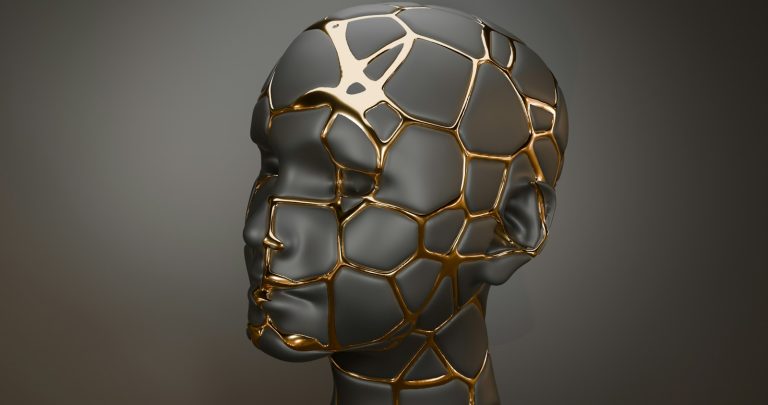
Our modern-day heroes have become broken heroes, no longer perfect and without blemish. Instead of winning the day without a scratch, they emerge from the battle scratched and bleeding.
Letting go of perfection
It seems to me that the cultural narrative of perfection, once so ingrained, has broken down to such an extent that we can no longer bring ourselves to worship the unbroken hero. It is simply beyond belief that such a person could exist. In some senses this might be seen as a great sadness – perhaps even the death of hope – but I choose to see it as an awakening. The fact that we now understand heroes, factual or fictional, as overcoming pain to achieve a victory, and that we connect better with a fantasy that speaks at least in part to the bitterness of reality, gives me hope.
It gives me hope because it suggests that, as a culture, we’re coming to understand that being a hero is no longer about being perfect or unblemished. It is about encountering everything that we are, and achieving a victory through that realisation – not in spite of it.
I notice this change in myself too. My heroes these days tend to be real people rather than fictional ones and, perhaps unsurprisingly, there are fewer of them. That shift came as part of my own learning that I don’t have to be perfect – and it has meant that I can accept imperfect heroes as well. That said, if I’m honest, I still get inspired watching a fictional hero win a righteous cause!
In TA terms, the unbroken hero speaks to what Taibi Kahler called the “Be Perfect” driver2: an inner push to get everything right, usually learned early and rarely questioned. A hero who can be hurt, make mistakes and still matter carries a different message – that we can be good enough without being flawless.
Think of a hero from your childhood, real or fictional, and write down three qualities you admired in them.
Then ask yourself: which of these did I turn into a rule for myself? And is there a flaw of theirs that I’d now find more human – even reassuring?
A question to sit with
Might therapy and increased self-understanding yet make heroes of us all?
1 Berne, E. (1961) Transactional Analysis in Psychotherapy. New York: Grove Press.
2 Kahler, T. (1975) ‘Drivers: the key to the process of scripts’, Transactional Analysis Journal, 5(3), 280–284.
A shorter version of this article was first published on Counselling Directory in February 2025.